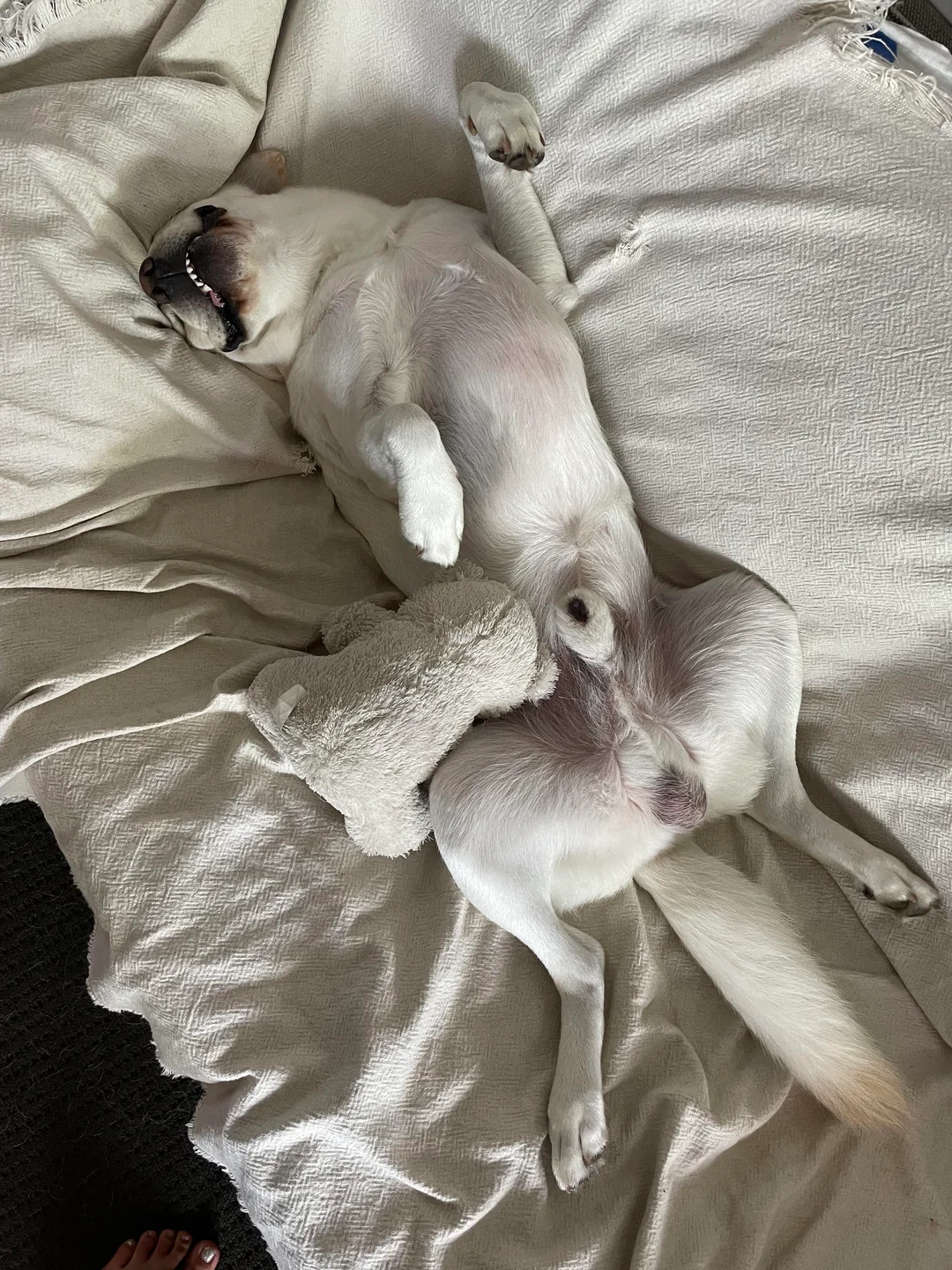
You’re sitting on the couch, and your dog is stretched out on the floor. Suddenly their paws start twitching. They let out a muffled woof, maybe a whimper. Their legs paddle like they’re chasing something across a field.
Is your dog dreaming? And if so, what about? It’s one of those questions every dog owner wonders about at some point, so let’s dig into it.
Yes, dogs almost certainly dream
Scientists can’t ask a dog what they dreamed about, of course. But research on sleep and brain activity suggests dogs have sleep patterns that look a lot like ours. They go through different stages, including REM sleep, which is the stage when most vivid dreaming happens in humans.
During REM, a dog’s brain is active, their eyes move under their eyelids, their breathing gets irregular, and their muscles may twitch. That’s when you tend to see the paddling, whimpering, and soft barks.
What happens in a dog’s sleep cycle
Dogs sleep a lot more than we do, often twelve to fourteen hours a day, and puppies and seniors even more. Their sleep happens in shorter cycles, with lighter and deeper stages.
A dog falls into regular sleep first, then moves into REM after a while. The REM phase is shorter than the deep sleep phase, but that’s where the action happens.
What do they dream about?
Nobody knows for sure, but there are clues. Studies in other animals, like rats, show that brain patterns during sleep resemble what happened during the day. For example, rats who ran a maze showed similar brain activity when dreaming.
So it’s reasonable to think dogs replay moments from their lives. A chase at the park, a game of fetch, a visit from a favorite person, or even the neighbor’s squirrel. It’s likely based on real experiences, rather than anything wild or imaginary.
I like to think my dog is dreaming about the time she nearly caught a rabbit. She would probably say it was a glorious victory.
Read Also: How to Create a Low-Stress Environment for Indoor Cats
Do dogs have nightmares?
Possibly. If your dog seems distressed, yelping, trembling, or acting afraid in their sleep, they could be having a bad dream. We can’t be sure, but the signs look similar to what we’d expect.
Dogs with stressful pasts, like rescues, may show this more often. If it happens frequently or your dog seems upset, talk to your vet, because it might be something else, like pain, anxiety, or a medical condition.
Should you wake a dreaming dog?
Generally, no. It’s usually best to let them sleep. Waking a dog suddenly can startle them, and a startled dog can react by snapping or biting, even a gentle one. They may not know where they are for a second.
If you really need to wake them, do it gently from a distance. Call their name softly, or make a quiet noise. Avoid touching them until they’re fully awake.
Twitching, running, and noises
These movements are normal during REM sleep. Dogs often twitch, paddle their legs, move their lips, and make small sounds. It doesn’t mean something’s wrong, and it’s often just a sign of healthy sleep.
That said, if the movements are very intense, violent, or the dog seems unable to wake up, check with your vet. Seizures can sometimes look like twitching, though they tend to be more rigid, longer, and the dog doesn’t respond to you.
Do puppies dream more?
Puppies seem to spend more time in REM sleep than adult dogs. That makes sense, since their brains are growing and learning at a rapid pace. All that new information needs sorting out.
Older dogs can also dream a lot, though their sleep may be lighter and more interrupted, especially if they have pain or cognitive changes.
Do small dogs dream more than large dogs?
Some researchers suggest smaller dogs may have shorter, more frequent dream cycles than bigger breeds. It’s an interesting idea and fits with what some owners see. But the evidence isn’t solid, so take it with a grain of salt.
Why dreaming matters
Sleep helps dogs process memories, learn, and recover. Dreaming is likely part of that. Getting enough good-quality sleep supports their mood, behavior, and health.
If a dog doesn’t get enough rest, they can become irritable, anxious, or hyper. A calm, comfortable sleeping place makes a difference.
Helping your dog sleep well
A few things can support better sleep. Give them a comfortable bed in a quiet spot. Keep a routine, with regular walks, meals, and bedtime. Make sure they get enough exercise and mental stimulation during the day. Avoid loud noises and disruptions where they rest.
Older dogs may need a softer, orthopedic bed, especially if they have sore joints.
When to be concerned
Most dreaming behaviors are normal. But watch for signs that suggest a problem: extreme restlessness every night, heavy or noisy breathing that doesn’t settle, sleepwalking-like behavior, sudden aggression when waking, or changes in sleep patterns.
If anything worries you, a vet check is a good idea.
A peek into their world
It’s pretty remarkable that our dogs might have rich inner lives, replaying their days while they sleep. Watching them dream can be strangely moving. They’re running, sniffing, playing, and just being dogs, even with their eyes closed.
Next time your dog starts twitching and woofing in their sleep, maybe just smile and let them chase that dream. They’ve earned it.