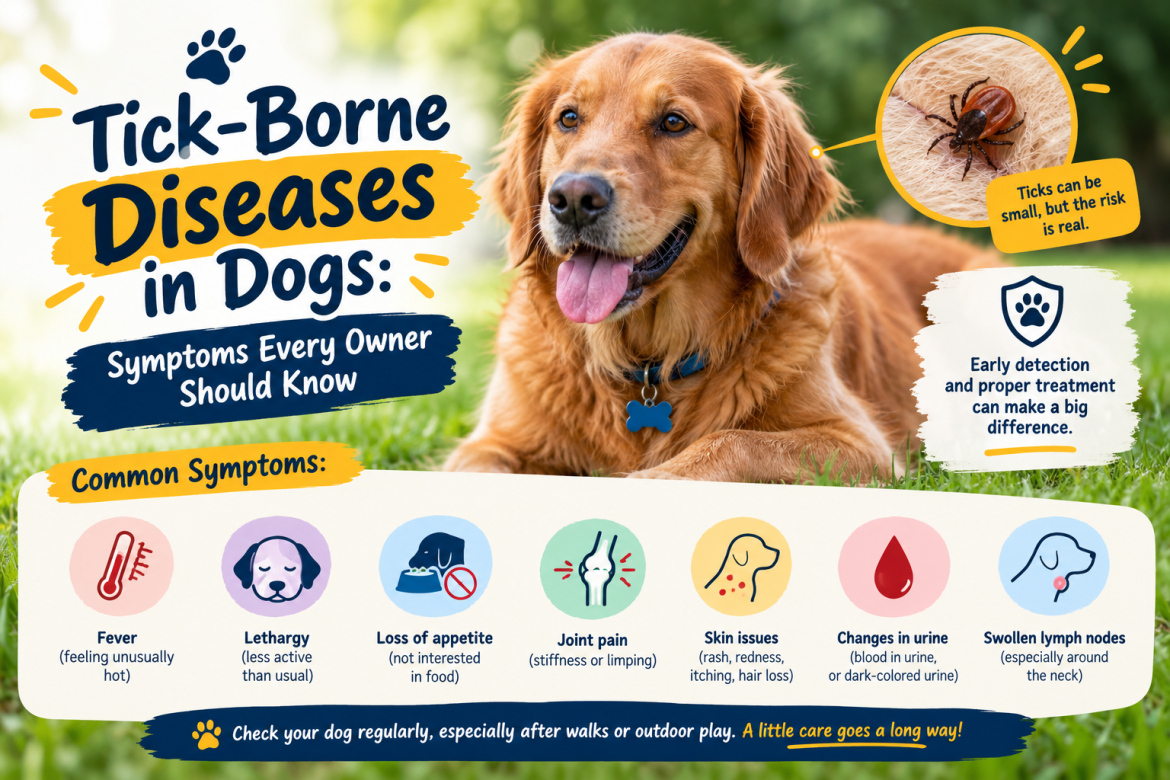
Ticks are tiny, but the trouble they cause isn’t. These little hitchhikers can spread several diseases to dogs, and some of the signs are easy to miss. If your dog spends time outdoors, in the woods, tall grass, or even your backyard, it helps to know what to look out for.
Let me walk through the most common tick-borne diseases and what they can look like. I’m not a vet, so use this as a guide for when to call yours, not as a way to diagnose at home.
Why ticks are a bigger deal than you’d think
A tick bite itself might cause minor irritation. The real worry is what the tick might carry. Bacteria and parasites can pass into your dog’s bloodstream while the tick feeds, and the longer a tick stays attached, the higher the risk.
Different ticks live in different parts of the country, and the diseases they carry vary by region. Your vet can tell you what’s common where you live.
Lyme disease
Probably the best known. Spread by deer ticks, it can cause fever, lameness that shifts from leg to leg, swollen joints, low energy, and loss of appetite. Some dogs show no signs for weeks or months after a bite.
In a small number of dogs, Lyme can affect the kidneys, which can become serious. That’s why testing and follow-up matter if your vet suspects it.
Ehrlichiosis
This one is spread by the brown dog tick and lone star tick. Early signs can be mild, like fever, lethargy, and reduced appetite. Later, some dogs develop bleeding problems, such as nosebleeds or bruising, along with weight loss and swollen lymph nodes.
It can hang around for a long time without obvious symptoms, so blood tests are important.
Anaplasmosis
Similar to Lyme in some ways, anaplasmosis can cause fever, joint pain, lethargy, and loss of appetite. Some dogs also have vomiting, diarrhea, or, in rarer cases, seizures. It’s often spread by the same ticks that carry Lyme, so dogs can be infected with more than one disease at once.
Rocky Mountain spotted fever
Despite the name, it isn’t limited to one region. It can cause fever, swelling in the face or legs, muscle pain, vomiting, and skin changes. Neurological signs like stumbling can appear in severe cases.
This disease can move quickly, so get your vet involved fast if you see these signs after a tick exposure.
Babesiosis
This one is caused by a parasite that infects red blood cells. Dogs may become weak, pale, and jaundiced, with fever, dark urine, and an enlarged spleen. Severe cases can be life-threatening.
Other diseases to know about
There are a few others, including Hepatozoonosis, which is spread when a dog eats an infected tick, and tick paralysis, caused by a toxin in some female ticks that leads to weakness and paralysis. The good news is that tick paralysis often improves quickly once the tick is removed.
General warning signs
Across these illnesses, the early signs overlap. Watch for fever, loss of appetite, lethargy, limping, swollen joints, pale gums, nosebleeds or bruising, vomiting, and weight loss. Symptoms may show up days, weeks, or even months after a bite.
That delay makes it easy to miss the connection, so if your dog has been exposed to ticks and seems unwell later, mention it to your vet.
What to do if you find a tick
Don’t panic. Remove it carefully with fine-tipped tweezers or a tick removal tool. Grasp it close to the skin and pull straight out with steady pressure. Avoid crushing it or twisting hard. Clean the area afterward and wash your hands.
Don’t use folk remedies like petroleum jelly, nail polish, or a hot match. They don’t work and can make things worse.
If you can, save the tick in a sealed bag or container, noting the date. It can help your vet if your dog gets sick.
Testing and treatment
If your dog gets sick, or if you’re concerned after a tick exposure, your vet may recommend blood tests. Many tick-borne diseases are treatable with antibiotics, especially when caught early. Some need supportive care, like fluids or other medications.
Follow your vet’s instructions fully, even if your dog seems to bounce back quickly.
Prevention is the best plan
The most effective strategy is a combination of things. Use a vet-approved tick preventive, whether it’s a chewable, a topical, or a collar. Never use a product made for another species, since some are toxic to dogs. Check your dog for ticks after outdoor time. Keep grass trimmed and clear brush around your home. Ask your vet about vaccines available for certain diseases, such as Lyme, and whether they’re right for your dog.
Year-round risk
Many people think ticks only matter in summer. In reality, some ticks are active in cooler weather, and mild winters make it worse. Talk with your vet about whether year-round prevention makes sense where you live.
Read Also: Best Cat Litter for Odor Control
Don’t forget the humans
Ticks that bite dogs can bite you too, and some of these diseases affect people. Check yourself and your family after time outside, and watch for signs of illness.
Bottom line
Tick-borne diseases can be sneaky, but they’re manageable if you stay alert. Use prevention, check regularly, and don’t ignore changes in your dog’s health. If something seems off after a possible tick bite, contact your vet.
Better to ask a question that turns out to be nothing than to wait on something that matters.