Losing a cat is a terrible feeling. One moment they’re on the porch, and the next they’ve slipped through the gap in the fence and are gone. If your cat goes outdoors, or even if they’re an escape artist, a tracker can give you some peace of mind.
But the market is crowded, and the options are not all the same. Let me explain the main types and what to look for.
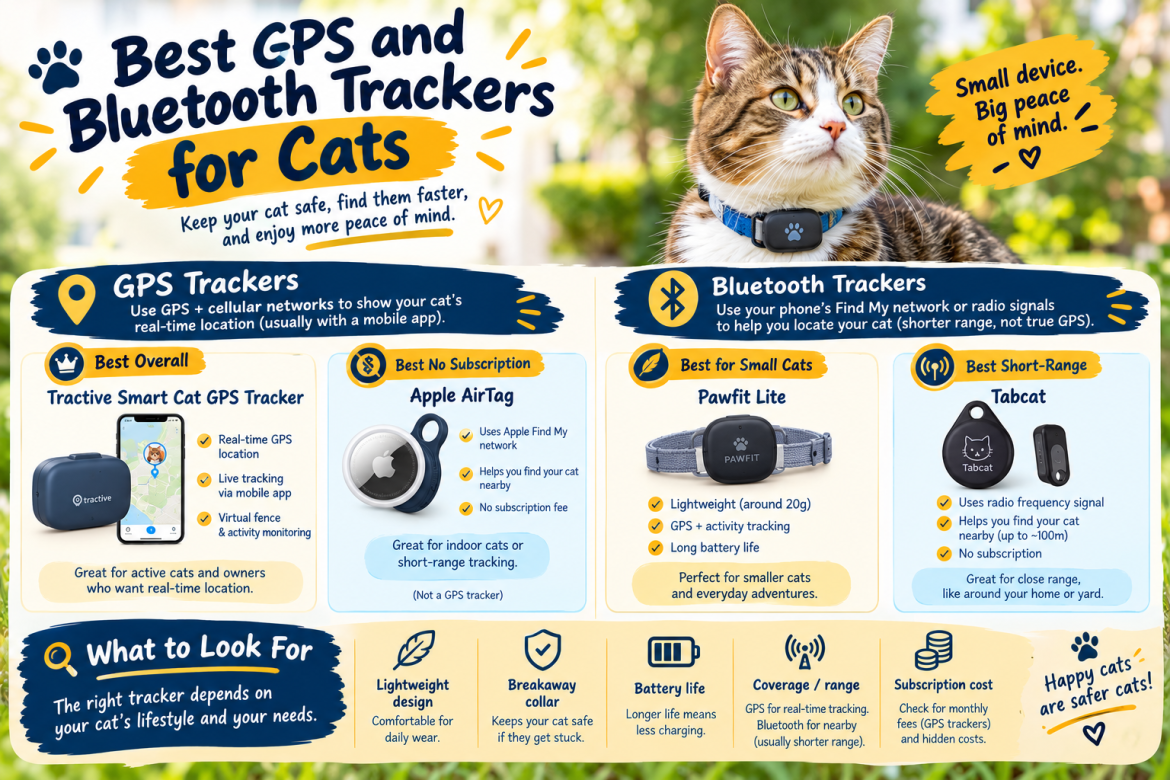
GPS vs Bluetooth: the big difference
This is the first thing to understand, because it changes everything.
Bluetooth trackers, like tags that connect to your phone or to other nearby devices, work over short range. They can help you find a cat who’s hiding in the house or lurking nearby. Some rely on a network of other users’ phones to report a location, which works well in busy areas but less so in rural ones.
GPS trackers use satellites and cellular networks to show your cat’s location in real time, over a much larger distance. They’re better for cats who roam. The tradeoff is cost, size, battery life, and usually a monthly subscription.
Which is right for your cat?
If your cat stays mostly in the house and yard, a Bluetooth tag may be plenty. If your cat wanders blocks away, or you live somewhere rural, GPS is more useful.
Think about how your cat behaves. Do they come when called? Do they travel far? Do you live near busy roads or woods? Those details matter.
Size and weight
This is a big one. Cats are small, and a heavy tracker can bother them or even cause injury. Look for lightweight devices designed for cats. A general rule people mention is keeping the device to a small percentage of your cat’s body weight, but check the manufacturer’s guidelines and ask your vet if your cat is tiny.
Kittens and very small adult cats may not be good candidates for some GPS models.
Battery life
Battery life varies a lot. Some trackers last a few days, and some last weeks. Longer battery life usually means a bigger, heavier device or fewer updates.
Consider how often you’d want to charge it, and whether you’re okay doing that regularly. If you forget, a dead tracker is just a decoration.
Read Also: Best Puzzle Feeders and Snuffle Mats for Bored Dogs
Subscription costs
Most GPS trackers need a monthly or yearly plan, because they use cellular service. Look closely at the total cost, including the device, the plan, and any activation fees. Some brands offer discounts for longer plans.
Bluetooth tags often have no subscription, which makes them more budget-friendly.
Accuracy and coverage
GPS is generally accurate, but it can be less reliable indoors or in dense areas. Cellular coverage affects how well the tracker reports in. In remote areas, the signal may be weak.
Check the coverage map for any device you’re considering, especially if you live outside a city.
Collar fit and safety
A tracker is only helpful if your cat will wear it. Use a breakaway collar, designed to release if it gets caught, to reduce the risk of choking or injury. Make sure the collar fits well, snug enough to stay on but loose enough that you can slip two fingers underneath.
Introduce the tracker slowly. Let your cat get used to the collar and device for short periods first.
Water resistance
Cats get wet, whether it’s rain, puddles, or sneaky trips through the sprinklers. Look for devices with a decent water resistance rating, so they keep working.
Geofencing and alerts
Many GPS trackers let you set a “safe zone.” If your cat leaves it, you get an alert. That’s helpful if your cat is a roamer, since you’ll know when they go beyond their usual range.
Some also show location history, so you can see where your cat goes. It’s interesting, and you might find a surprising favorite hangout.
Extra features
Some trackers include a light or sound feature that helps you find your cat in the dark. Others track activity or sleep. These extras are nice to have, but don’t pay for them unless you’ll use them.
Brands people look at
For GPS, brands like Tractive, Fi, Weenect, and Garmin come up. Each has its own strengths, size, and plan costs. For Bluetooth and network-based tags, options include Apple AirTag-style devices and Tile, usually used with a secure case or collar holder made for pets.
Do check current models and reviews, since the options change quickly, and look for feedback from other cat owners, not just dog owners.
A note about AirTags
AirTags and similar tags are popular because they’re cheap and small. They’re not true GPS trackers, though. They rely on nearby devices in the network to report their location. In a city, that can work well. In a rural area with few people, less so.
Use a secure, cat-safe holder, and keep in mind that they aren’t designed specifically for pets.
Don’t skip the basics
A tracker is an extra, not a replacement. Make sure your cat has a microchip, with up-to-date contact details. A tag with your phone number is useful too. Keep recent photos handy, and make sure your cat is spayed or neutered, since that reduces roaming.
How to test it
Before relying on a tracker, test it. Put it on your cat at home and see how it reports their location. Walk around the yard, check accuracy, and learn how the app works. That way, if your cat does go missing, you won’t be figuring it out in a panic.
Cost and value
Cheaper isn’t always better, and expensive doesn’t guarantee a perfect fit. Think about how you’ll use it and what features matter. For many cat owners, a mid-range GPS tracker with a light, comfortable design is a good balance.
Final thoughts
A tracker can’t promise your cat won’t get lost, but it can help you find them faster. Choose one that’s the right size, has reliable coverage, and fits your budget. Pair it with a microchip and a good collar.
And then, ideally, you’ll never need it. But it’s nice to know it’s there.