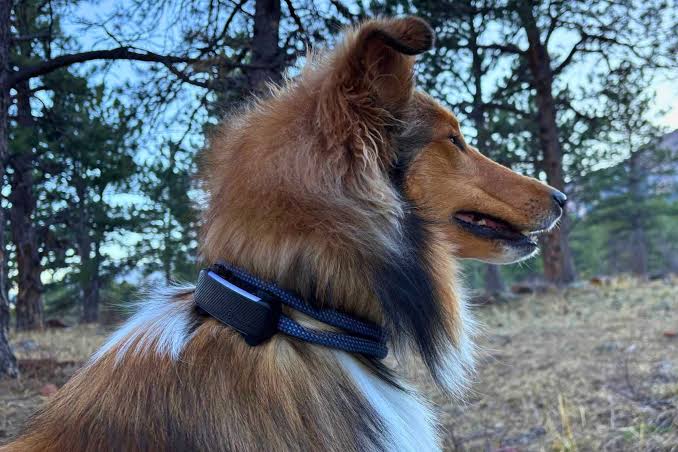
There’s a specific stomach-drop feeling when you realize the gate got left open and your dog is nowhere in the yard. It’s happened to me exactly once, and that was enough to convince me a GPS collar wasn’t a “nice to have” gadget — it’s genuinely peace-of-mind insurance for a dog who’s fast, curious, and completely uninterested in how worried you are about it.
GPS Collar vs. Bluetooth Tracker — Know the Difference
This trips a lot of people up. Something like an Apple AirTag is a Bluetooth tracker, not a true GPS collar, and it relies on other nearby devices detecting it to give you a location. That works fine in a dense city, but it won’t reliably help you find a dog who’s bolted into the woods or somewhere with no foot traffic. A real GPS collar taps into satellites and cellular networks for live location tracking, which is what actually matters if your dog roams, hikes, or lives somewhere rural.
What Actually Matters When Choosing One
- Update frequency. Most collars update every 30-60 seconds. A few premium options refresh every 2-3 seconds, which makes a real difference when your dog is actively running rather than standing still.
- Battery life. Ranges anywhere from a few days to several months depending on the brand and how often you’re using live tracking mode.
- Cellular coverage in your area. These collars are only as good as the network they rely on — deep wilderness with poor cell service will frustrate you no matter how good the collar is.
- Subscription costs. Almost every GPS collar requires an ongoing monthly fee for the tracking service itself, on top of the upfront device cost. Read the fine print before buying.
- Geofencing. The ability to set a safe zone and get an alert the instant your dog leaves it — genuinely one of the most useful features for escape-prone dogs.
My Picks
1. Tractive — Consistently the most recommended pick for the average dog owner, and it’s easy to see why. It’s significantly cheaper than most competitors upfront, offers reliable real-time tracking with escape alerts, and recently added health monitoring features like activity tracking and scratch detection that can help flag potential skin issues or stress early. It relies entirely on cellular networks, so it’s best for suburban or rural properties with decent coverage rather than deep wilderness.
2. Fi Series 3 — The top pick for owners who want the most technically capable option. It offers standout battery life (often stretching to around three months), fast geofence alert speeds, and reliable LTE-based live tracking. It automatically detects walks and car rides and has a dedicated “lost dog mode” if your dog goes missing. It’s pricier than Tractive, but the battery life alone makes a real difference if you don’t want to be charging a collar every few days.
3. Garmin Alpha TT 25 / Dogtra Pathfinder 2 — Built for hunters and rural property owners who need serious range and don’t want a monthly subscription fee. The Pathfinder 2 stands out for multi-dog households especially, since it can track up to 21 dogs simultaneously — overkill for most pet owners, but genuinely useful if you’re managing a working pack.
4. Halo Collar 5 — Marketed as one of the most accurate GPS dog fences available, with unlimited customizable virtual fences and built-in training tools layered on top of tracking and activity monitoring. A strong all-in-one option if you want containment features alongside tracking, not just a locator.
5. SpotOn GPS Fence — If containment is your bigger concern rather than pure tracking, SpotOn is worth a specific look. It offers particularly accurate boundary control, even on wooded or irregularly shaped properties where a physical fence isn’t practical, and its no-subscription fencing features help offset the higher upfront price over time.
6. SATELLAI Smart GPS Collar — A newer entrant combining real-time tracking, customizable virtual fences, and AI-driven health insights. Testers with more sensitive or high-energy breeds have found it holds up well to daily wear and active use.
Read Also: Best Dog Beds for Large Breeds That Last
A Few Honest Caveats
Even the best GPS collar has blind spots. Cellular-based trackers won’t work reliably in areas with poor signal, so if you’re hiking somewhere truly remote, understand that the collar’s usefulness drops accordingly. Some testers have also found accuracy can wobble in real-world conditions — a few dots landing off-route during a hike, for instance — so don’t treat any collar as flawless. It’s a very good tool, not a guarantee.
Also, factor in the true ongoing cost. A $60-150 device might carry a $5-10/month subscription, which adds up to well over $100 a year on top of the initial purchase. Worth it for most people, but it’s not a one-time expense the way it might look at first glance.
Bottom Line
If you want the best all-around value for a typical suburban or rural dog owner, Tractive is hard to beat on price and features together. If you want the most technically robust option and don’t mind paying more upfront, Fi Series 3’s battery life and tracking speed are genuinely best-in-class. And if boundary containment matters more to you than pure “where is my dog right now” tracking, SpotOn or Halo Collar 5 are worth prioritizing instead.
Whatever you choose, remember a GPS collar doesn’t stop your dog from getting loose in the first place — it just means you’ll know exactly where to go get them, fast, instead of driving around the neighborhood calling their name into the dark.