I’ll never forget the first time I found a tick buried in my dog’s ear. I basically levitated off the couch. If you’re reading this because you just had a similar moment of horror, take a breath — you’re about to fix it, and honestly, once you land on the right product, this becomes one of those “set it and forget it” parts of dog ownership.
Why This Isn’t Optional
I used to think flea and tick prevention was one of those “nice to have if you’re really careful” things. It’s not. Fleas cause more than just itching — they can lead to skin infections, tapeworms, and serious allergic reactions in some dogs. Ticks are worse, honestly, since they carry Lyme disease, ehrlichiosis, and a handful of other nasty illnesses that are way harder to treat than to prevent. Vets pretty universally agree: prevention beats treatment, every single time, both for your dog’s comfort and for your wallet.
The Main Types You’ll Choose Between
Before getting into specific products, it helps to know your options, because “best” really depends on which format your dog will actually tolerate.
- Oral chews — Easiest for dogs who’ll eat basically anything, and they avoid the mess of topicals.
- Topical/spot-on treatments — Applied between the shoulder blades, absorbed through the skin. Good for dogs who are picky eaters or who you don’t trust not to spit out a pill.
- Collars — Continuous, long-lasting protection with basically zero effort once it’s on.
- Prescription vs. over-the-counter — Prescription options go through more rigorous safety testing and require a vet to screen your dog first, which is part of why vets tend to lean toward them.
My Picks
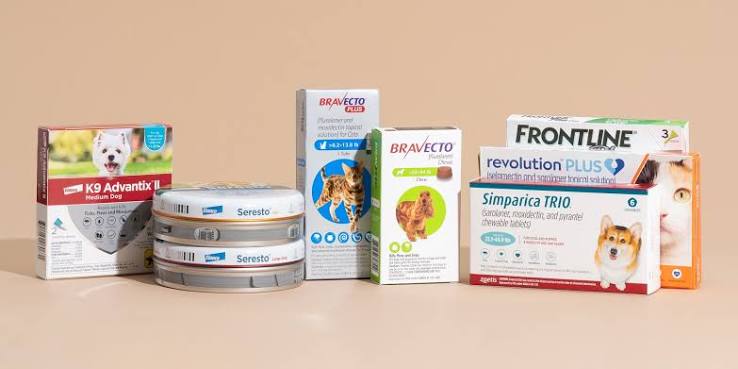
1. Simparica Trio — This is a monthly chewable that covers fleas, ticks, heartworm, and intestinal worms all in one. If you want to consolidate multiple medications into a single monthly chew, this is probably it. A lot of vets default to recommending this one simply because it covers so much ground.
2. NexGard — A soft, beef-flavored monthly chew that most dogs treat like a treat rather than medicine, which honestly makes life easier if you’ve got a dog who’s suspicious of pills. It’s effective against fleas and several tick species, including black-legged and American dog ticks.
3. Bravecto — The big selling point here is duration — one dose lasts a full 12 weeks instead of the usual month. If you’re the type who forgets monthly doses (no judgment, life is busy), this cuts down how often you have to remember.
4. Bravecto Quantum — New-ish and honestly kind of wild: it’s a vet-administered injection that protects for up to a year. It’s not something you do at home, but if you want true set-it-and-forget-it protection, ask your vet if this is available and appropriate for your dog.
5. Credelio Quattro — Combines flea and tick protection with heartworm and intestinal worm coverage in a single monthly chew. Similar territory to Simparica Trio, so this often comes down to which one your vet prefers or which one your dog tolerates better.
6. Seresto Collar — If you don’t want to deal with monthly anything, this collar offers protection for up to eight months. It’s water-resistant, which matters if your dog treats every puddle like a personal swimming pool. It starts killing and repelling pests within a day or two of putting it on.
7. Revolution — A topical option that’s broad-spectrum, meaning it also covers heartworm and some other parasites alongside fleas and ticks. Popular for puppies and smaller dogs specifically.
8. Advantage Multi — Another broad-spectrum topical, applied monthly, that a lot of vets keep in rotation as a reliable, well-established option.
9. Vectra 3D — A topical spot treatment that’s also labeled for repelling pests, not just killing them after the fact, which some owners prefer for dogs in high-exposure areas like wooded yards or hiking trails.
Read Also: How to Create a Low-Stress Environment for Indoor Cats
A Word on Safety
Please don’t just grab whatever’s cheapest at the grocery store without checking it’s actually appropriate for your dog’s weight and age. Dosing matters a lot here, and using a product meant for a 60-pound dog on a 10-pound one (or vice versa) can cause real problems. And if you’ve got a multi-pet household, never use dog-specific flea treatment on a cat — some ingredients that are totally fine for dogs are genuinely toxic to cats.
If your dog has a history of seizures or certain other health conditions, mention that to your vet before starting anything in the isoxazoline class (that covers NexGard, Bravecto, Simparica, and Credelio) since there’s been some documented association worth discussing case by case.
Bottom Line
If you want the simplest possible routine, a monthly all-in-one chew like Simparica Trio or Credelio Quattro is hard to beat since it knocks out fleas, ticks, heartworm, and intestinal parasites together. If your dog is a picky eater or you just don’t trust yourself to remember monthly doses, the Seresto collar or Bravecto’s 12-week window takes a lot of that pressure off. And if you want the ultimate low-maintenance option, ask your vet about Bravecto Quantum.
Whatever you land on, the real key is consistency. A missed month is exactly when fleas and ticks find their opening, so pick the format you’ll actually stick with — not just the one that looks best on paper.